Design that Comforts, not Converts.
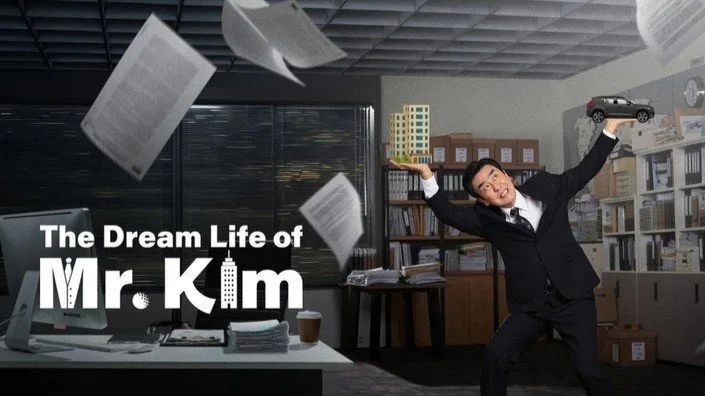
The Dream Life of Mr. Kim on Netflix
Late at night, around 12 a.m., I found myself sitting alone on the sofa watching The Dream Life of Mr. Kim on Netflix. Near the end of the series, there’s a surreal scene where the protagonist, Mr. Kim, speaks to his old self. Nothing dramatic happens, but something quiet shifted in me. My worries loosened and my anxiety softened.
It was strange how simply watching a fictional character make sense of their emotions helped me make sense of mine. My emotions were being processed, and the overwhelming sense had calmed down. It was the moment when scattered feelings became nameable. I often feel this way watching K-dramas; that quiet relief of feeling understood.
Empathy often begins there: in the recognition that we are not the only ones carrying a particular weight. Stories do this so naturally. They sit with us, hold up a mirror, and say, “See? You’re not alone.” And for a brief moment, that’s enough to breathe again.
It makes me wonder: "If stories can comfort us, can design do that too?"
Stories process emotion through scenes, pauses, and dialogue. Design, in its own way, shapes how we process emotions through layout, pacing, and the way it guides our attention. Good design removes noise, clarifies what matters, and lets us feel understood without saying a word.
To me, that is what empathetic design truly is: when a product or brand understands a user’s pain point and solves it by offering only what they need. No pressure, no excess, no extraction.
However, many digital products today, such as apps and service websites, do the opposite. Before they understand us, they ask for something from us: our emails, our data, our attention, our commitment.
They prioritize growth metrics long before they prioritize human needs. Maybe that’s why new apps feel overwhelming: they want to convert us before they comfort us. I personally run the other way when I hit a paywall especially when they offer a 3-day free trial. And I'm betting many feel this. Prospective users end up feeling more doubt, more pressure, and frankly more fatigue. If the business goal is truly to solve my pain point, why does the process make me more anxious, especially when I decide not to subscribe? I’m not against conversion, conversion is often the result of trust. I’m questioning what we choose to put first.
An authentic brand, I think, goes beyond communication. It creates a small community around empathy: a space where people feel understood, not optimized. And this happens when the brand earns the trust of the users, not by offering the perfect solution, but by trusting the users first.
If the product treated me with autonomy, I'd be open to believe in the product brand's purpose, and that would take me on a journey to believe in their product to solve my needs. To circle back to the Netflix show, it took the series 10 episodes for making me feel understood. The character arc was built scene after scene, exploring the many emotional situations. This led me to believe in the story and take part in the hero's journey, where in the end I found common ground between the hero and me. The hero's closure became my own emotional closure.
And so I wonder,
What would design look like if it tried to comfort rather than convert?
Are the products we call “successful” the ones that start with comfort, not pressure? And can a company choose trust and long-term care without breaking its business?
Originally published on LinkedIn